Education
New Book Explores the Intersection of Education and Culture. What Inspired ‘Rabbit on the Moon’
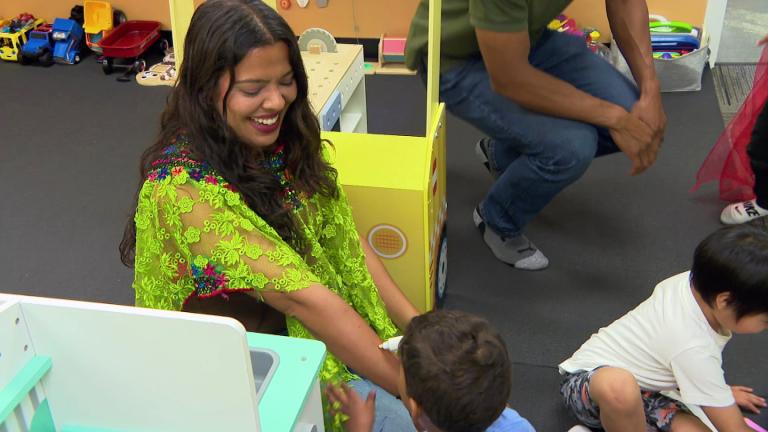
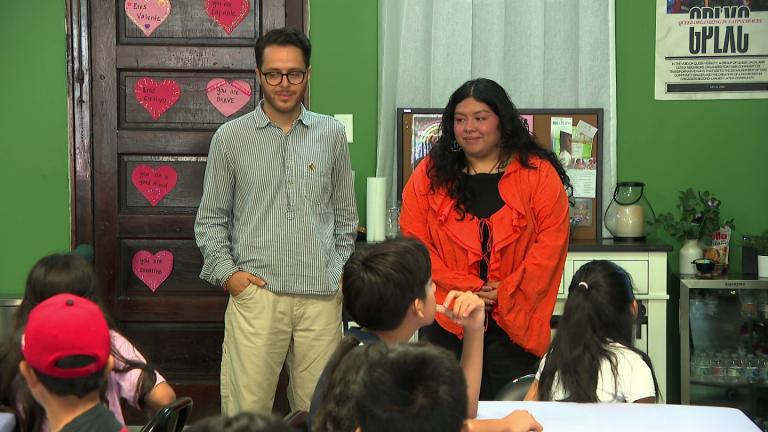
For many of us, the journey to understanding our identity can be complex — and Elizabeth Alvarez is no exception. She has dedicated her life to teaching, empowering students and breaking down educational disparities.
Alvarez shares all of this and more in her new book “Rabbit on the Moon: Embracing My Mexican-American Identity.”
The title comes from an old folk story of a rabbit who goes all the way to the moon to trick a coyote. While there, the rabbit creates the phases of the moon. This story was how a group of Alvarez’s students who had come from Mexico had learned those phases.
“And back then I was thinking, that’s not how you teach science,” Alvarez said. “Storytelling is not for science. It’s about concepts and ideas.”
But it opened her eyes to the broader role culture could play in education.
Alvarez said that when she was a student in Chicago, she never felt accepted; she was looked at as different because of her Mexican identity.
“And as the years followed, it was more of my spirit being killed,” Alvarez said.
But that fueled her passion for teaching and ensuring her students don’t feel the way she did. Alvarez said a good teacher is able to bridge culture and life outside the classroom with the education students receive inside it.
“I wanted people to understand the journey of belonging,” Alvarez said. “Belonging has been a core value of mine, and that’s where schooling comes in. You really want to show caring, nurturing, understanding. Children want to be valued, seen, and then they can succeed.”
Read an excerpt from the book below.
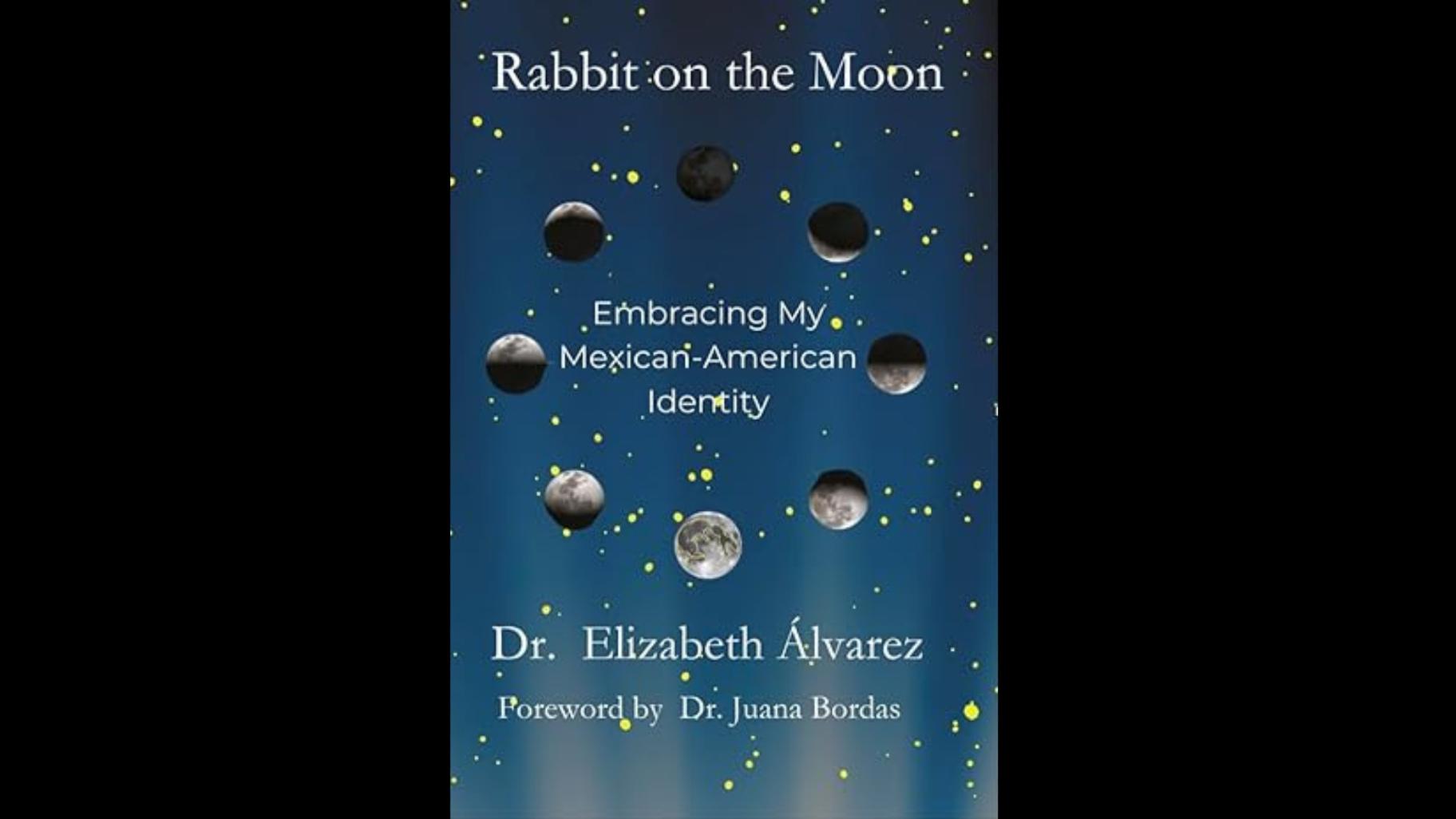 “Rabbit on the Moon: Embracing My Mexican-American Identity” by Elizabeth Alvarez
Reflecting on the impactful aftermath of the Brown v. Board of Education decision, one famous image by photographer Will Counts stands out: It’s of 15-year-old Elizabeth Eckford, clutching her books and wearing sunglasses, making her way to high school amidst a backdrop of hostility. She was part of the Little Rock Nine, a group of nine Black students who, in 1957, were initially prevented from entering Little Rock Central High School by the Arkansas Governor, who deployed the National Guard to bar their way. It was only after the Mayor of Little Rock appealed to President Eisenhower that Army troops were dispatched to escort the students, allowing them to attend classes. In the photo, Elizabeth Eckford is seen encircled by White girls, their expressions twisted in anger, with one girl, Hazel Bryan, shouting, “Go home, n-word!” The intense hatred on her face is striking. To me, this image is a vivid reminder of the attitudes prevalent 15 years later among some of my own grammar school peers—hatred and racism that appeared deeply rooted.
I often find myself reflecting on the photograph of Hazel Massery spewing insults. Who was she then? Why did she scream those obscenities? How does she share that moment with others? Have her descendants seen that photograph, and if so, how does it affect and mold them? How does it mold others not related to her today? Do they share the sentiments she expressed in that picture that day, or have they chosen a different path like Hazel did? In the early 1960s, Hazel Massery sought out Elizabeth Eckford to apologize. It took courage to take off the mask and stop performing the same racial routines and roles. She later engaged in peace activism and social work delving into the question posed by Cornel West, “How did I become so well-adjusted to injustice?” This leads me to wonder whether my classmates ever contemplate their past actions and the impact those actions had. Like Hazel, have they transformed into agents of change, or are they still oblivious to the harm they inflicted? Have they given themselves a chance to gain self-awareness and understand how their experiences have molded them? Our perception is constrained by our ability to introspect deeply. The more self-aware we become, the greater our ability to comprehend and empathize with what lies beyond our personal perspective. Thus, mirrors and windows serve dual purposes: mirrors invite us to introspect and seize the opportunity for self-reflection, while windows encourage us to understand others and embrace the opportunity for external insight.
This exploration of past attitudes unexpectedly found resonance in more recent events. I hadn't anticipated finding answers to my questions until 2016, when it became evident that the legacy of those captured in the photograph endured, the cycle of hatred persisting through generations. The stark realization that racism was far from eradicated in my country hit me profoundly on August 12, 2017, in Charlottesville, Virginia. The sight of White nationalists marching through the University of Virginia with lit tiki torches, infuriated over plans to remove a Confederate statue, was chilling.
Witnessing the young men on television, their faces filled with the same vitriol as Hazel from the photo, was a jarring reminder of the enduring presence of racism. It was as if the grandsons of those in the 1957 picture were now the ones spewing hatred. That moment took me back to my childhood experiences, reviving the fear I felt as a young brown girl in grammar school confronted with racism. For the first time in years, I was that scared little girl again, facing the reality that the fear and hatred I hoped had been left in the past were still very much alive in the present.
Reprinted by permission of X-Factor EDU. Excerpted from Rabbit on the Moon: Embracing My Mexican-American Identity by Elizabeth Alvarez. Copyright 2024 Elizabeth Alvarez. All rights reserved.